


Staying invested during market declines can be challenging. It’s human nature to feel afraid when the market dips and headlines make it worse. Throughout market cycles of all kinds - including downturns - financial advisors turn to the data. Ultimately, history has shown that these downturns offer real benefits. Here are a few key reasons why maintaining your investment strategy during downturns might be advantageous:
1. Long-Term Growth Potential
Market Recovery: Historically, financial markets have experienced declines followed by recoveries. While it’s impossible to predict how long downturns last, remaining invested allows you to take advantage of the market's eventual recovery, which can lead to long-term gains.
Compound Growth: By staying invested, you continue to benefit from the power of compound interest, where your returns on investment generate their own returns. Missing out on a recovery phase could mean missing out on significant growth over time.
2. Avoiding the "Timing the Market" Trap
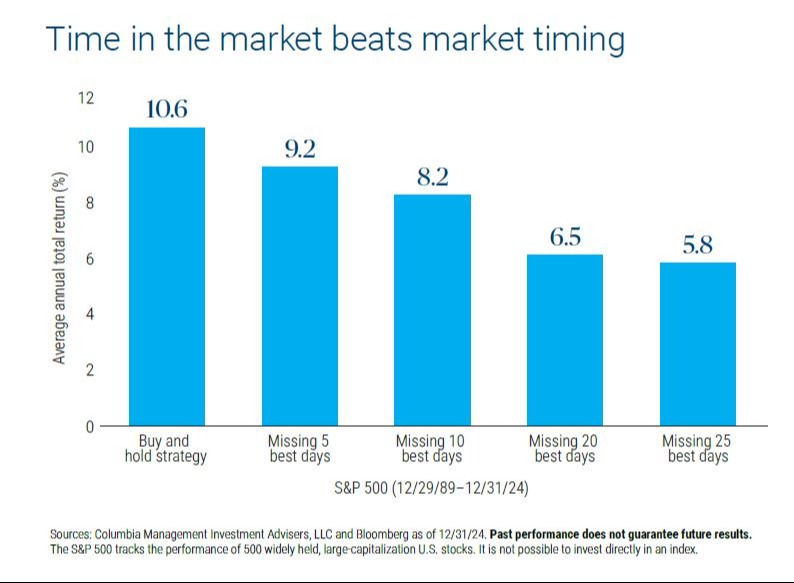
Difficult to Predict: It’s nearly impossible to consistently predict the best time to buy or sell. Selling during a decline with the hope of getting back in at lower prices often leads to missing the market's rebound. Many investors who try to time the market end up with lower returns over time than those who stay the course.
Opportunity Cost: When you sell during a downturn, you lock in your losses and risk missing out on the gains that typically come after a market correction. If you stay invested, you can capture those rebounds and avoid locking in losses. You also lose the ability to reinvest your dividends at lower prices. If you are able to buy more shares as the market declines, you don’t just recover when the market goes back up… you go up exponentially because you now own more shares that you bought on sale.
3. Mitigating the Risk of "Cash Drag"
Idle Cash Doesn't Grow: Keeping money on the sidelines during a market decline means it isn't growing, and inflation can erode its purchasing power. Staying invested ensures your assets have the opportunity to earn returns, even if they’re temporarily down.
4. Buying Opportunities at Lower Prices
Discounted Prices: A market decline often presents opportunities to buy quality assets at a discount. If you’re invested in index funds or diversified portfolios, market downturns may allow you to purchase shares at a lower price, potentially increasing your long-term return when the market recovers. It’s a great time to reallocate non-retirement assets and to upgrade the quality of funds that you hold. You can find deals on investments that might have been priced too high previously.
5. Staying Aligned with Your Investment Plan
Discipline and Strategy: If you have a long-term investment strategy in place, staying invested during market declines helps you stick to your plan. Reacting emotionally to market fluctuations can lead to impulsive decisions that deviate from your original goals and can cost you long-term security for short term relief.
Dollar-Cost Averaging: If you continue to invest regularly, even during a decline, you’re engaging in dollar-cost averaging (DCA). This strategy allows you to buy more shares when prices are low, lowering your overall cost per share over time. If you have cash sitting somewhere, a market downturn is the time to put those idle funds to work for you. You can buy more on sale.
6. Avoiding Panic Selling
If you sell during a market decline, it may be driven by panic or fear. Staying invested helps you focus on your long-term objectives. If you “lost” a lot of money in one of the previous downturns, chances are that you sold and locked in losses and/or were holding less than ideal investments. This is the time to seek active management for your investments so that you can better weather the storm.
7. Diversification Benefits
Risk Reduction: In diversified portfolios, different asset classes often react differently to market changes. Bonds, for example, may perform well when stocks are declining. Staying invested in a diversified portfolio helps you manage risk and reduce the impact of downturns in any one asset class.
In summary, staying invested through market declines offers the chance for long-term growth, mitigates the risk of missing recoveries, and supports your investment plan. Of course, it’s always important to review your portfolio periodically and ensure that your investments still align with your risk tolerance and goals. But generally, the benefits of staying invested far outweigh the potential short-term gratification of trying to time the market.
If you have questions, or would like to connect by phone, zoom or in person, feel free to visit my calendar and schedule a time to meet: www.calendly.com/kfn.
A diversified portfolio does not assure a profit or protect against loss in a declining market. Dollar cost averaging will not guarantee a profit or protect you from loss, but may reduce your average cost per share in a fluctuating market.